
Every spring and summer, as the flowers bloom and pollen fills the air, conversations about hayfever start buzzing almost as loudly as our bees! One of the most frequently asked questions we hear is: “Can local honey help with hayfever?”
The honest answer is that there’s no scientific proof that honey prevents or cures hayfever. Because honey is classed as a food, we’re not allowed to make medical claims. But here’s the interesting part: for generations, people have believed that eating local honey may ease seasonal sniffles.
The idea behind this belief is simple: local honey contains tiny traces of pollen from the plants around the hives. By enjoying a spoonful regularly, some people think you’re giving your body a gentle “preview” of that pollen, which might help it become less sensitive over time. It’s a bit like a natural introduction to your local environment.
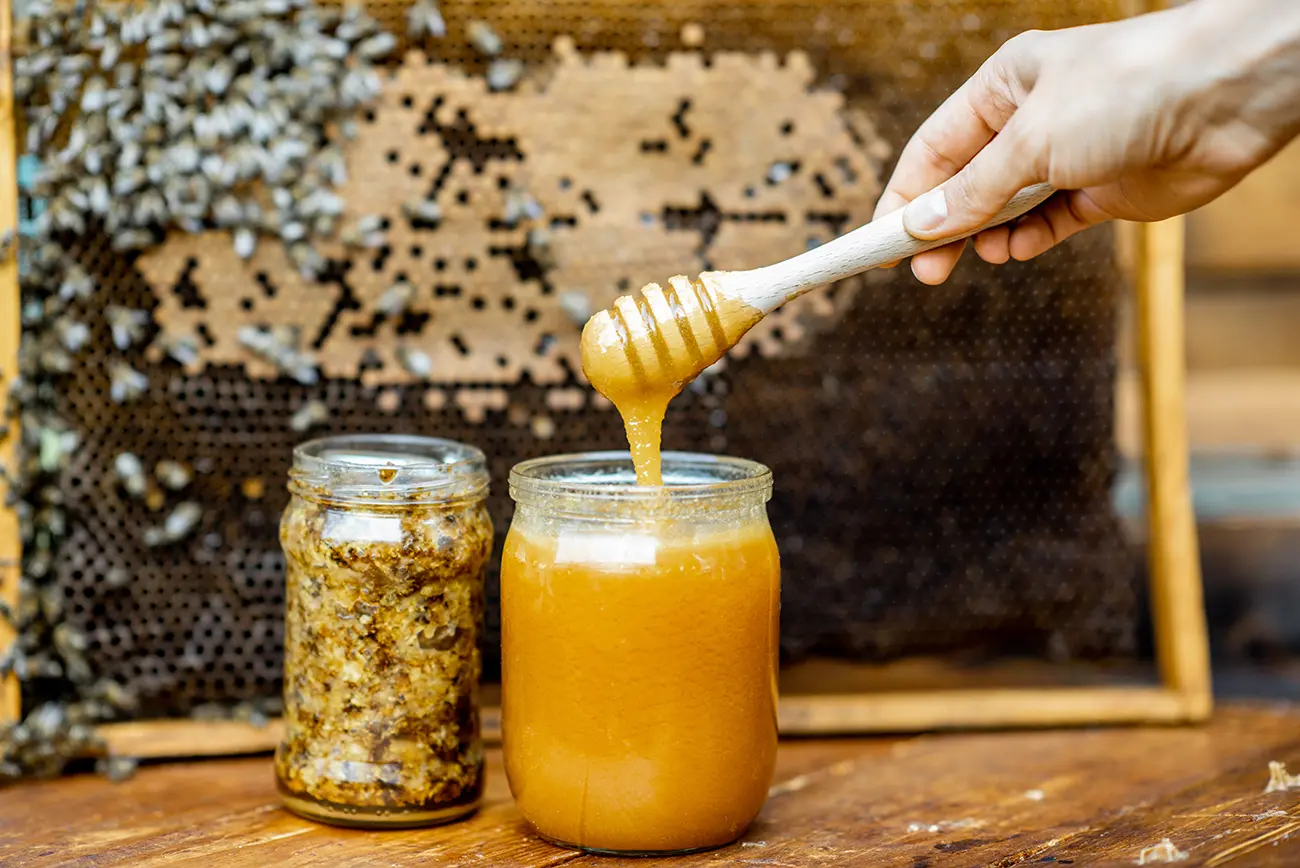
While researchers are still undecided, what’s undeniable is the sense of connection this tradition gives. Choosing honey made right here in Dorset means you’re tasting the very blossoms that surround our hives—oil seed rape, hedgerow flowers, and wild clover. It’s nature in a jar, and it feels good to know exactly where your food comes from.
Even if the hayfever benefit remains a belief rather than fact, honey has plenty to offer: it’s delicious, versatile, and makes a wholesome alternative to refined sugar. Stir it into tea, drizzle it over yogurt, or enjoy it straight from the spoon (our favourite!).
So, while we can’t promise to chase away the sneezes, we can promise that every jar of Palmer’s Honey is pure, local, and made with love by our busy bees. That’s something to smile about—hayfever or not!
Pick up your jar in our shop or order online today